
Table of Contents
How Recoil Actually Works
Every weapon in PUBG Mobile has a fixed, learnable recoil pattern — it's not random, even though it can feel that way under pressure. Most assault rifles climb vertically for the first several bullets, then start drifting sideways as the magazine continues, usually favoring one direction depending on the gun. The mistake most players make is treating recoil control as "pull down and hope" instead of learning that specific gun's actual shape.
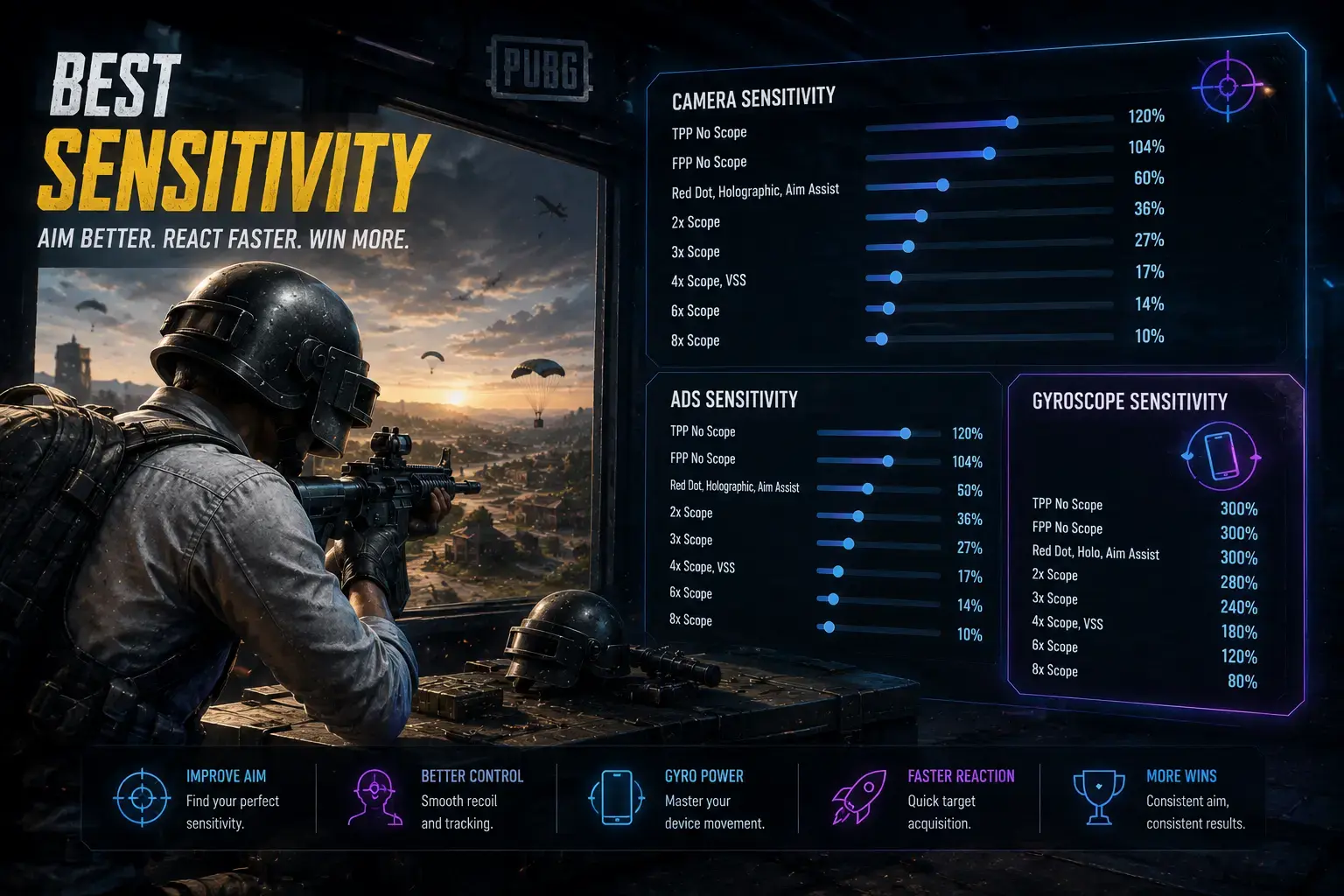
Gyroscope — Why It Changes Everything
If you're not using gyroscope aiming, you're fighting recoil with thumb-only compensation, which caps out fast at range. Gyroscope lets you counter recoil with small physical device movements layered on top of thumb aim, which is dramatically more precise once it's muscle memory. It has a real learning curve — most players feel worse before they feel better — but it's close to a requirement for consistent mid-to-long-range spray control at higher skill levels.
Start with a moderate sensitivity rather than jumping straight to extreme settings. Too high and you'll overcorrect every micro-movement; too low and you won't be able to compensate for heavier recoil guns like the AKM in time.
Attachments That Actually Help
Compensators are the single best recoil attachment in the game — they reduce both vertical and horizontal spread and should be your default pickup over a muzzle brake or suppressor if pure control is your priority. Vertical foregrips meaningfully tame vertical climb, and are especially valuable on harder-kicking weapons like the AKM or Beryl M762. Half-grips are a solid middle ground when a vertical foregrip isn't available, improving ADS speed while still helping stability slightly.
Stocks matter more than people think, especially on SMGs and DMRs — a tactical stock reduces horizontal recoil and movement spread, which matters a lot in close-range spray fights where hip-fire and quick ADS are common.
Learning Individual Gun Patterns
Every weapon's recoil "personality" is different, and treating them all the same is where most control breaks down. The M416 has a relatively forgiving, mostly-vertical climb, which is part of why it's a default favorite. The AKM kicks noticeably harder and drifts more aggressively, demanding earlier and stronger compensation. The Beryl M762 is similar to the AKM but with a sharper initial kick. SMGs like the UMP45 and Vector have fast, tight patterns that reward short controlled bursts over sustained spray, especially at range.
Rather than trying to learn every gun at once, pick your two or three most-used weapons and drill those specifically until the compensation becomes automatic — that's a far better use of practice time than shallow reps across every gun in the game.
Using the Training Range Properly
The training range is underused by most players past their first few sessions. The most useful drill isn't just spraying at a static target — it's spraying while strafing, since that's what actually happens in real fights, and strafing changes how your thumb needs to compensate compared to standing still. Spend time specifically on your main weapon at realistic engagement distances (50-100m) rather than point-blank, since that's where most real fights that matter actually happen.
Burst vs Full Auto — When to Use Each
Full auto is only worth it at close range or once your compensation is genuinely reliable — past that, burst fire (2-3 round bursts) is often more effective, since it resets the recoil pattern between bursts and keeps your shots tighter at range where full-auto spray naturally opens up. A common progression: full auto inside 30m, controlled bursts from 30-100m, and single tap or burst beyond that.
The only real way to know if your recoil control is actually improving — not just feeling smoother — is tracking your accuracy and damage numbers match over match rather than trusting the vibe. That's exactly the kind of trend FragTrack's Performance view is built to surface from your uploaded match results.